
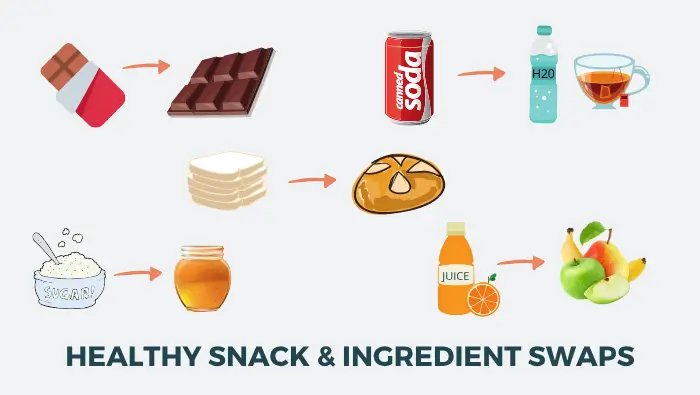
Making healthy swaps is easier than you might think
I know, I know, I get it! “Healthy swaps” can sound bland, boring and totally not as fun as their sugary and fat-filled counterparts.
Bear with me though, put your judgement aside for five minutes and take a scroll through this list.
Now I’m not going to tell you that any of the healthy alternatives I suggest here taste exactly the same as the ‘regular’ option. Of course, they don’t.
I believe that most of them actually taste better.
Because… after your palate adjusts from the excessive sweetness of overly processed, packaged foods, you’ll find that unprocessed, naturally sweetened foods taste really good.
I’ve got loads of recipes for you to try here on my blog. Check out the Recipe Index and the Healthy Snacks category page for starters.
And if you’re a woman over 50, and you’re finding that processed foods, especially sugary treats aren’t kind to you anymore, read this post: The New Rules for Weight Loss After Menopause.
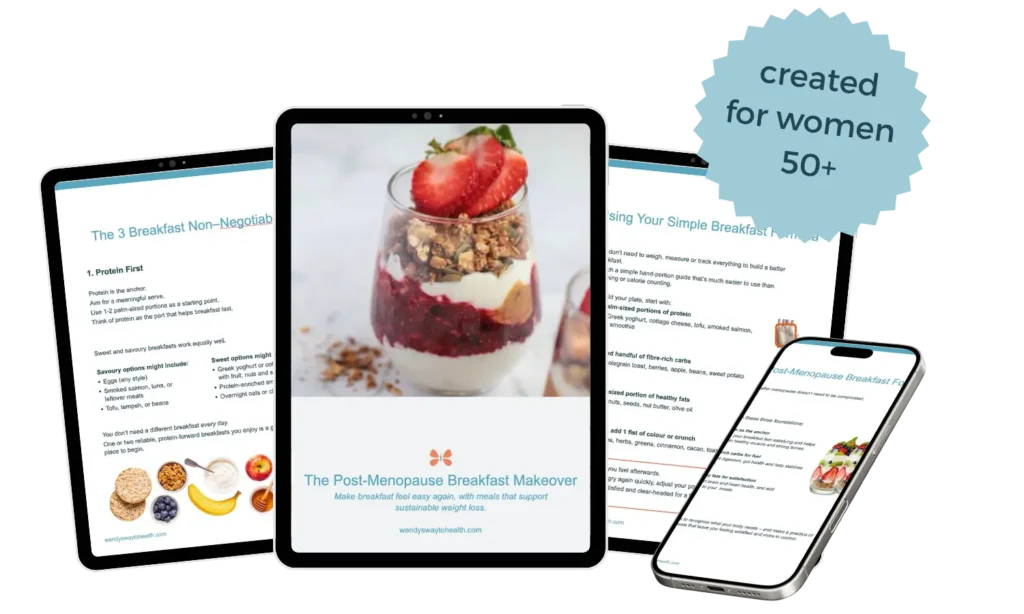
You should also grab a copy of my free Post-Menopause Breakfast Makeover – it’s a simple way to start eating in tune with the way your body works now.
⤵️ Pin this image to come back to later
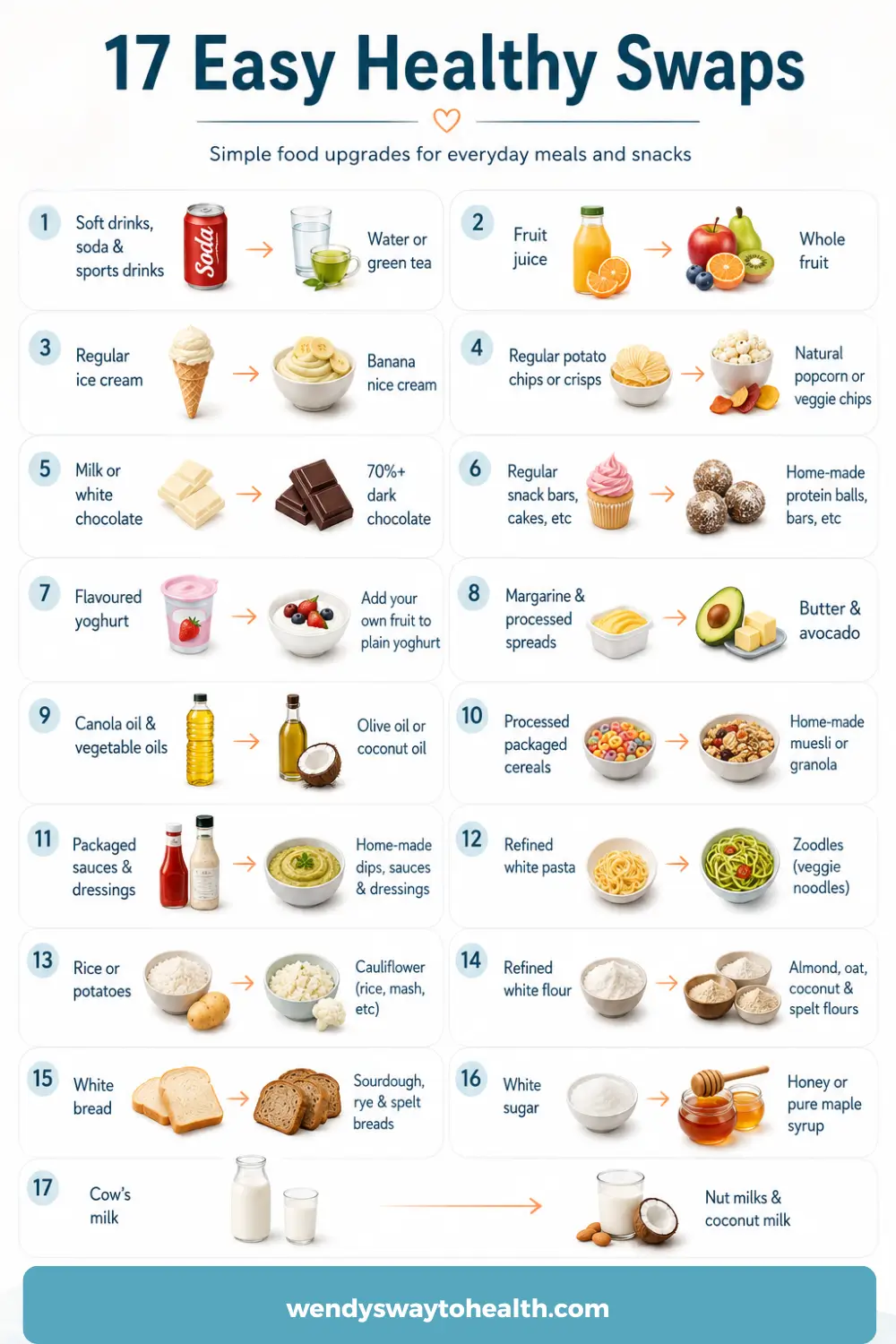
Now take a scroll through the list below. My challenge to you is to choose just 2 or 3 simple swaps you can try. And just see how you go.

1. Drink water or tea instead of soft drink & soda
Besides the excessive amounts of sugar, soft drinks are also dehydrating. Drinking plenty of water will keep you hydrated, plump up your skin, and help you control your weight, among other things.
If you don’t like plain water, add fruit, veggies, fresh herbs, or flavoured ice cubes.
Make your own fizzy water with a Soda Stream.
Drink Rooibos, green or herbal teas. Add fruit to green tea and chill it for a delicious iced tea. Read about the benefits of Rooibos tea in this post.

2. Whole fruit instead of fruit juice
Fruit juice is pretty much just concentrated sugar in large amounts. It takes a lot of fruit to make fruit juice, so you may be consuming a large amount without even realising.
Did you know that a lot of the juices on the supermarket shelves aren’t even made from real fruit? And the juices & smoothies you buy from those trendy juice bars, some of those have added sugar!
Whole fruit does contain natural sugars, but it also has fibre, vitamins & minerals, to help your body process the sugar properly. So make your own juices & smoothies at home, using a blender so you get the goodness of the whole fruit.

3. Banana ‘nice cream’ instead of regular ice cream
There are tons of recipes out there for yummy frozen fruit desserts, and I highly recommend that you try them! Search Google and Pinterest, and you’ll see what I mean.
If you haven’t tried nice cream yet, you definitely need to try this Banana mango nice cream. This is creamy, delicious ‘soft serve’ at it’s best!
I also highly recomment that you try these Mango ice cream popsicles. I keep some on hand in the freezer all summer long for a delicious, healthy treat after a hot & sweaty run.
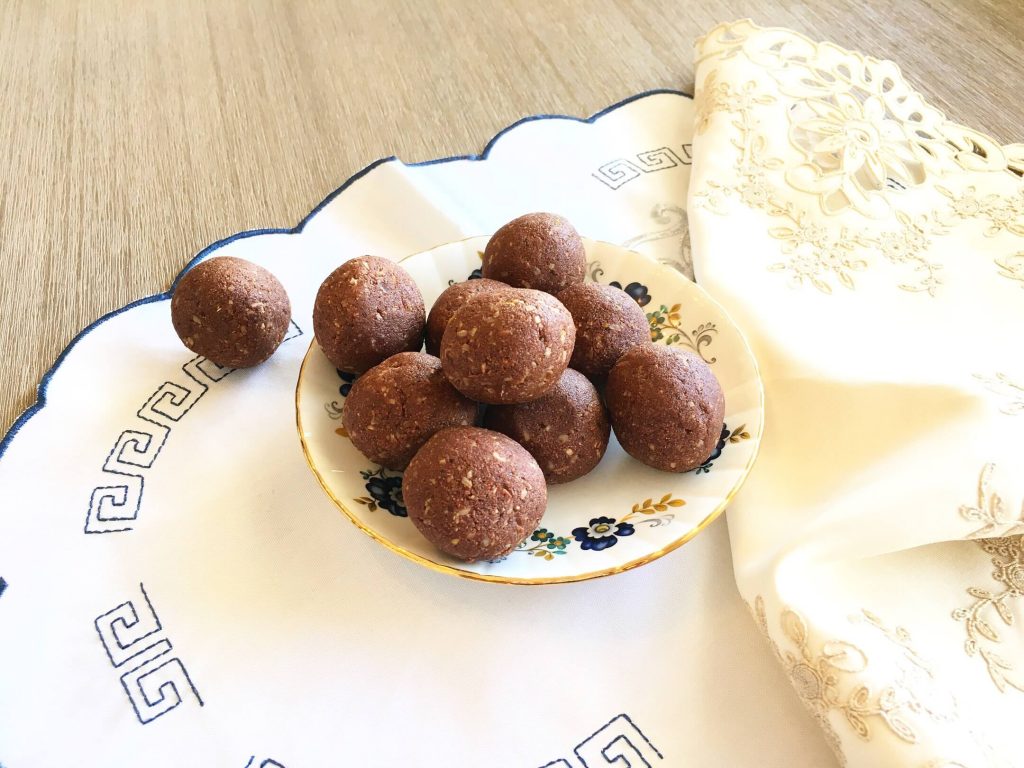
4. Home made protein balls, bars & muffins instead of regular snacks
It does take planning and preparation to make your own snacks, but it’s well worth the effort to avoid excessive amounts of sugar, refined flours and other not so great ingredients.
I’ve got lots of easy to make recipes here on my blog. Have a look through these categories on the recipe index page: Healthy Baking, Snacks & Treats, Desserts.
When I’m looking for healthy swaps, one of my favourite go-to websites, besides my own of course, is wholefoodsimply.com. Bianca has a huge variety of snacks, treats & dessert recipes, and healthy versions of just about everything you can think of!


5. Butter or avocado instead of margarine
If you don’t know by now that butter is better for you than margarine, and avocado is a healthy fat, then you must have been hiding under a rock!
Seriously though, margarine is a nasty chemically made concoction, that can lead to illness & disease when it’s consumed long term.
Saturated fats, like butter and avocado, are now considered ‘healthy fats,’ meaning that they’re good for you, when consumed in small amounts as part of a balanced diet.
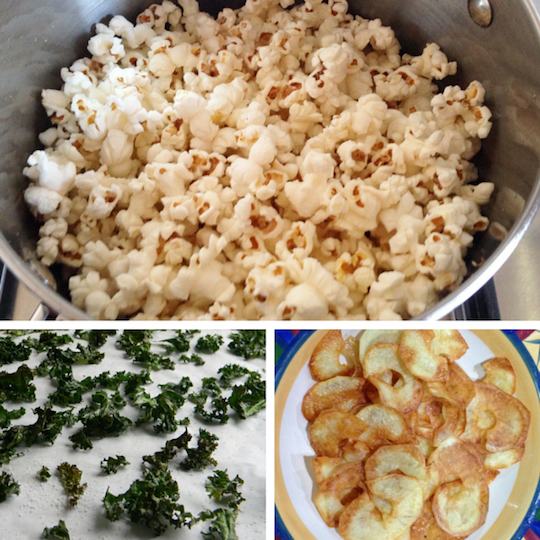
6. Home made popcorn and homemade veggie chips instead of regular potato chips/crisps
Most regular potato chips are cooked in unhealthy vegetable oils. Another good reason to avoid them is that a lot of them contain palm oil.
The issue with palm oil is that it’s cultivated in an unsustainable way, especially in Indonesia and Malaysia. This threatens the indigenous community and wildlife, in particular orangutans.
It’s quite easy to make your own potato chips and they are seriously yummy. Try my recipe for Homemade veggie chips.
7. Olive oil or coconut oil instead of canola or vegetable oils
Extra virgin olive oil, avocado oil and coconut oil, are the best oils you can choose for your health. Olive oil is really versatile, you can cook and bake with it, and use it in dressings, dips & sauces.
Canola and vegetable oils are very high in Omega 6 fatty acids, which can lead to inflammation in the body. They’re also bleached and go through a very high level of processing before they make it to the supermarket shelves in their plastic containers.
If that’s not enough to put you off, these polyunsaturated oils are also susceptible to oxidisation, both on the shelf, and inside your body.
And finally, as part of their processing, these oils often contain trans fats, which has been associated with many serious health problems.
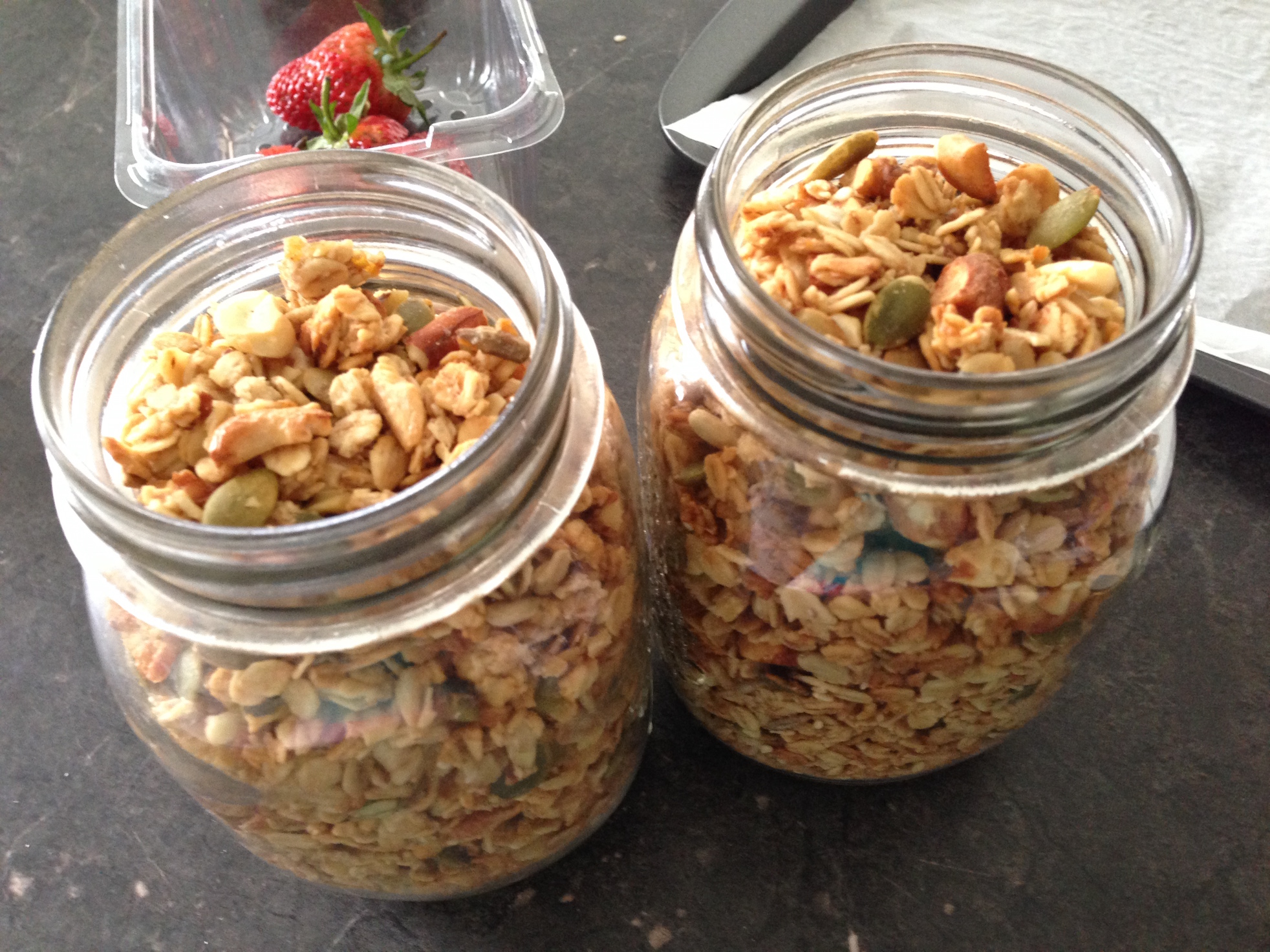
8. Home made muesli and granola instead of packaged cereals
Packaged breakfast cereals are mostly high in sugar, although you probably wouldn’t think so if you believed the marketing hype on the boxes!
They all have different amounts of sugar, so if you’re going to buy them, you really must know how to read labels.
The other option is to make your own. Make your own muesli or granola, and tweak the recipes to your liking with your favourite nuts, grains & seeds.
Try my regular Home made muesli or the super yummy Banana muesli.
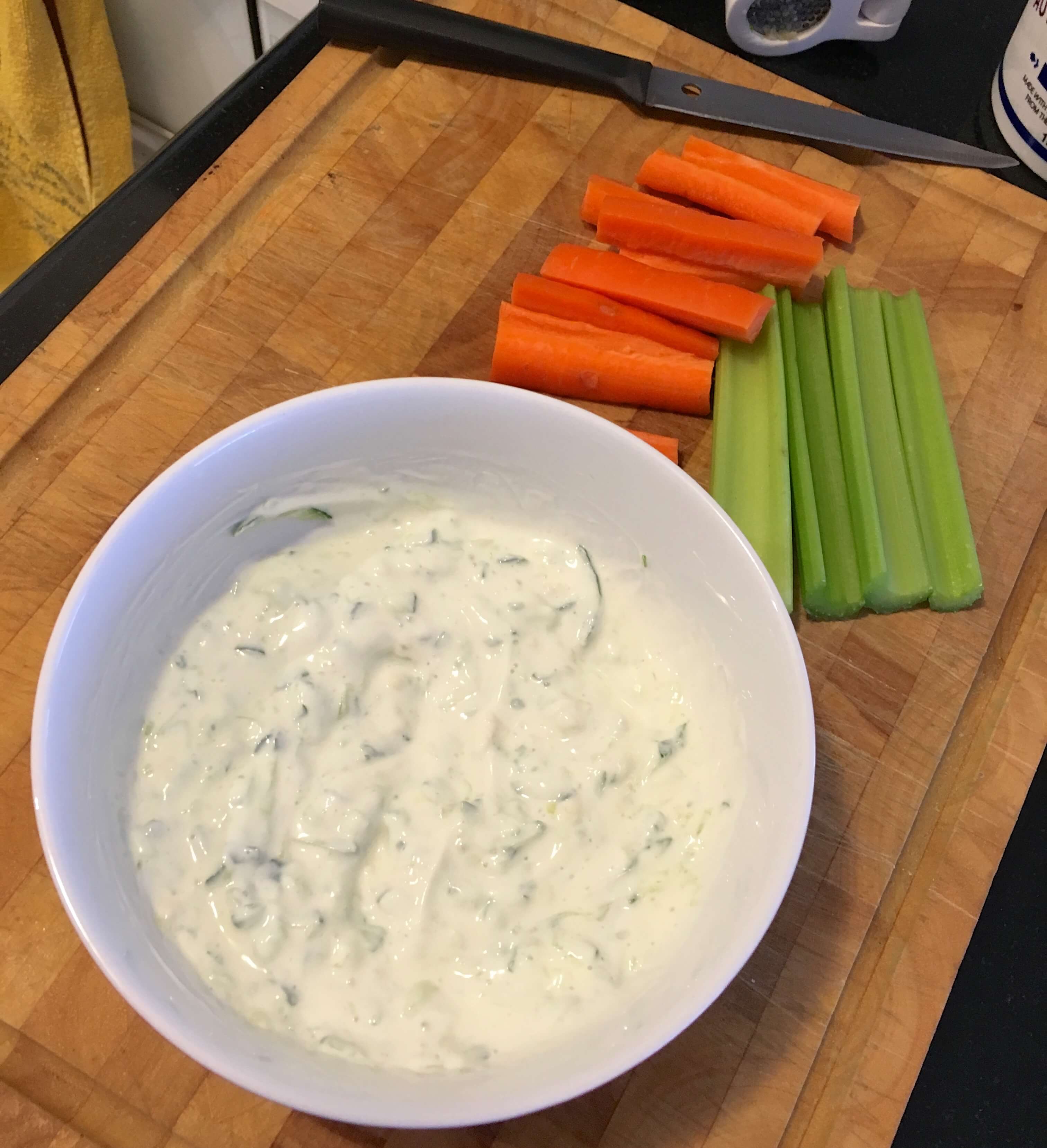
9. Home made dressings/sauces/dips instead of packaged ones
Again, the reasoning for making your own is to avoid some of the ingredients used in the commercial varieties. Don’t be fooled by low fat and lite labels either, these usually have excessive amounts of sugar added to replace the flavour that the fat would have provided.
Make sure you read the labels when you do buy them, so you understand what you’re consuming and how much. See above for the link to download my free label reading guide.
It really is quite easy to make your own salad dressings, mayonnaise and dips. It just takes a little bit of planning, and like anything, once you’re in the habit, it’s easy.
Try this delicious Mayo recipe or this Greek Tzatziki dip.
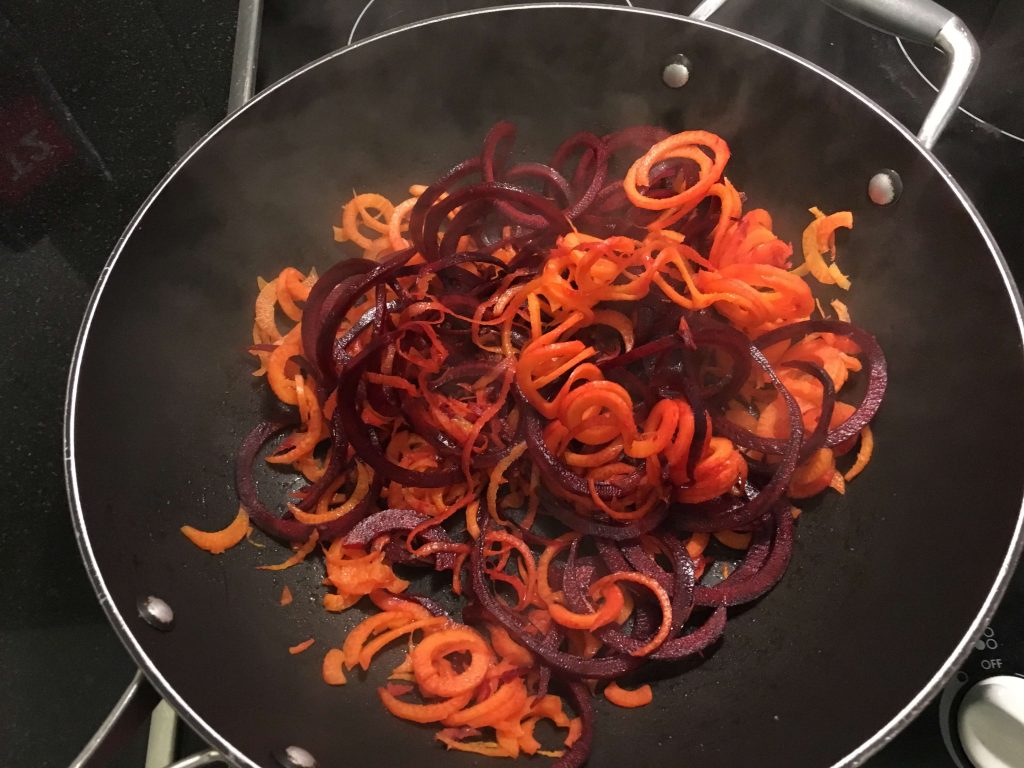
10. Zoodles instead of pasta
Make your own veggie noodles from zucchini, carrot, sweet potato, beetroot (or whatever you like) to use in pasta dishes instead of pasta.
I especially love using carrot and beet noodles with bolognese sauce. The flavour combo is delicious, and you get an extra vegetable hit, so it’s win-win!
Check out inspiralized.com for some amazing recipe ideas and veggie noodle creations. I follow them on Facebook, and pop over whenever I need some inspiration.
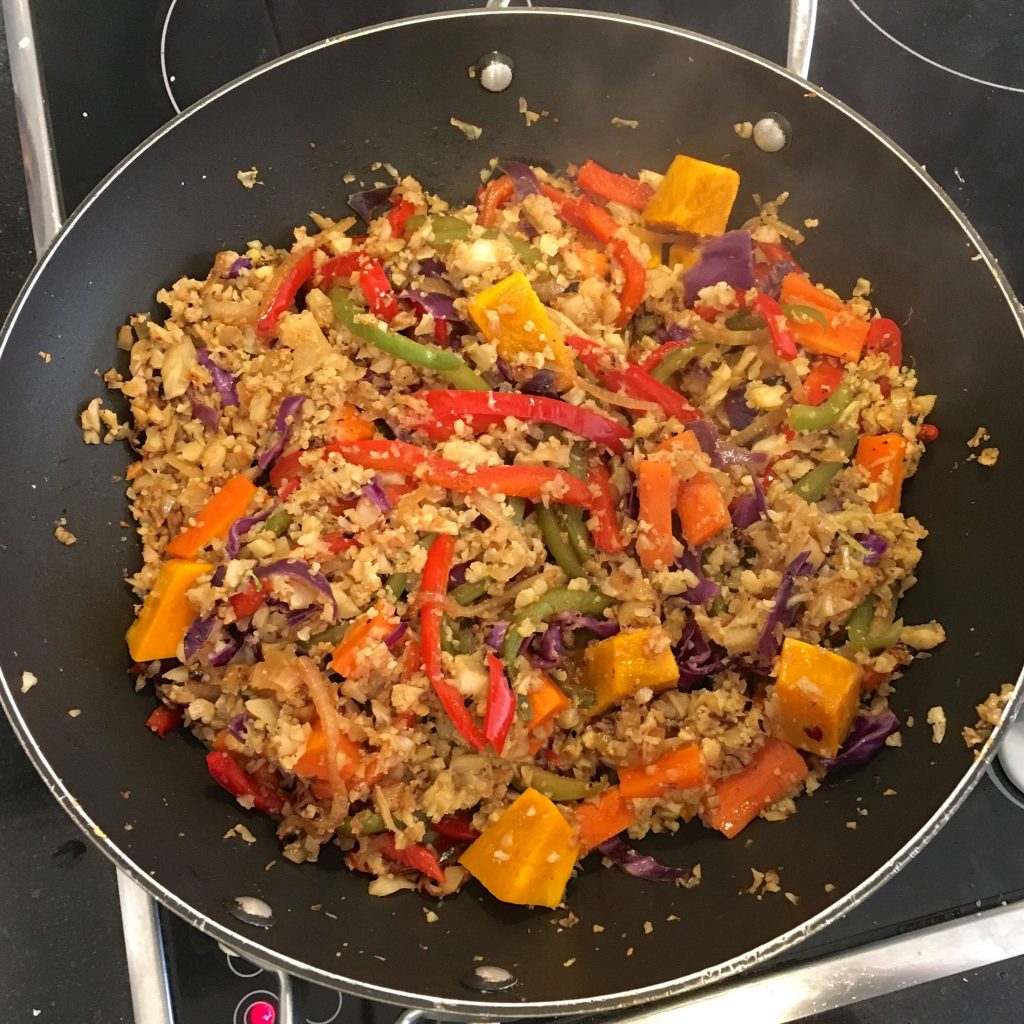
11. Cauliflower instead of rice or potatoes
Don’t get me wrong, rice and potatoes have a valid place in a balanced diet, but sometimes it’s nice to have an alternative. Most of us don’t eat enough vegetables, and they can provide a healthy swap for starchy carbs sometimes.
Try grated cauliflower as a substitute for rice next time you make Fried rice. Or steam and then mash cauliflower with garlic or herbs for a change from regular mashed potato.
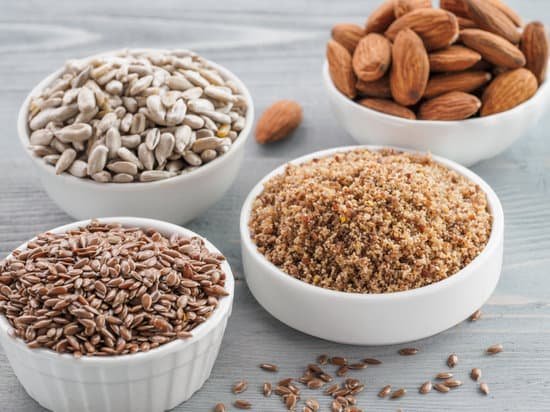
12. Almond meal/coconut flour/spelt flour/buckwheat instead of white flour
There are lots of alternatives to white flour, depending on what you’re cooking or baking. I think there are a lot of treats, like muffins and banana bread, that can be made better for you with alternatives like almond meal, coconut flour and ground flaxseed.
A good way to find out what you might like is to just start experimenting!
Try my Banana walnut bread, or these Strawberry & coconut muffins for starters, and you’ll understand what I mean.
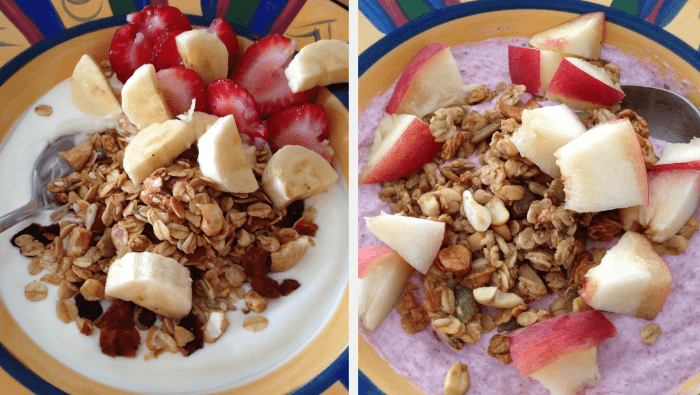
13. Plain yoghurt with added fresh fruit instead of flavoured yoghurts
At the risk of sounding like a broken record, the reason I recommend buying plain yoghurt and adding your own flavouring is, you guessed it, added sugar! Along with other ingredients that just aren’t necessary in yoghurt.
Just add a little bit of vanilla or a teaspoon of honey to plain Greek yoghurt, then top it with some fresh fruit, nuts and seeds.
Check out this post to learn how to build a simple Yoghurt brekkie bowl.

14. Sourdough, rye, sprouted grain breads & wraps instead of white bread
I love bread, but I mean real bread, not the fluffy, sweet white stuff that gets passed off as bread these days.
Bread has changed a lot over the years, and white bread loses so many nutrients during the processing, that the manufacturers now add some back at the end!
Wouldn’t you rather eat good, wholesome bread made from just a few ingredients, that has some substance, like sourdough, rye, or sprouted grain bread?

15. Raw local honey or pure maple syrup instead of refined white sugar
It’s best not to add sugar whenever you can, as there is sugar added to just about everything that we buy these days.
When it comes to cooking and baking, honey and maple syrup are great alternatives to white sugar that still taste good. I like to bake with them, as I prefer the flavour, and I also find that I can use less.
Cinnamon and vanilla are also great natural ways to sweeten porridge, smoothie bowls, desserts and even coffee.
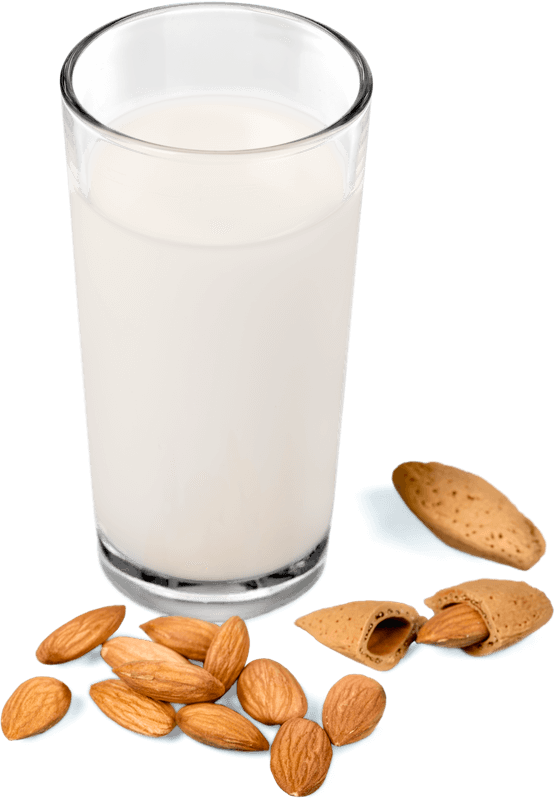
16. Nut milks and coconut milk instead of cow’s milk
I do like the taste of cow’s milk in my coffee and tea, however I like to use coconut milk in porridge and a lot of my baking.
Nut milks like almond or cashew, are a great alternative for anyone with a dairy allergy or intolerance.
As with everything, make sure that you read the labels when buying them, as a lot of them, especially the non chilled varieties, have additives and preservatives.
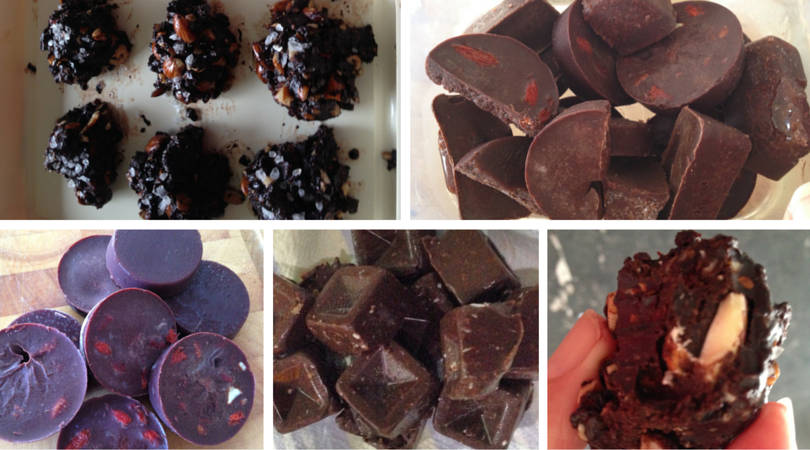
17. Dark chocolate instead of milk chocolate
So I made sure to save the best til last, haha! Dark chocolate can be good for you, as opposed to milk chocolate, with it’s high levels of sugar.
I used to be a big milk chocolate fan, but after I discovered the benefits of dark chocolate, I thought that I would have a go at switching.
I now regularly make my own, yep it’s easy! Try my recipe, and read about the benefits of cacao and dark chocolate: 3 Ingredient chocolate.
So what do you think?
I hope I’ve inspired you with this list to maybe try something new, or a little bit different. It’s good to get out of your comfort zone sometimes, and try new ingredients and new flavours.
Of course, I’m not suggesting that you should always be swapping your regular potato chips or ice cream for healthier versions. The occasional indulgence has a lot less impact, when it’s well, occasional!
I’ve created a handy infographic that summarises all of these swaps. You can download it for free by clicking the button below.
Trying to lose weight?
The free Post-Menopause Breakfast Makeover shows you how to build satisfying breakfasts that support weight loss – without calorie counting, boring diet food or tiny portions.
Your body’s changed. A smaller bowl isn’t the answer.
Click the button below to grab yours now.